How to Choose Tableware for a Hotel Project: A Guide for Designers and Architects
A practical framework for choosing tableware for a hotel project: service format, materials, collection depth, color, glass tableware, drinkware, samples and ordering.
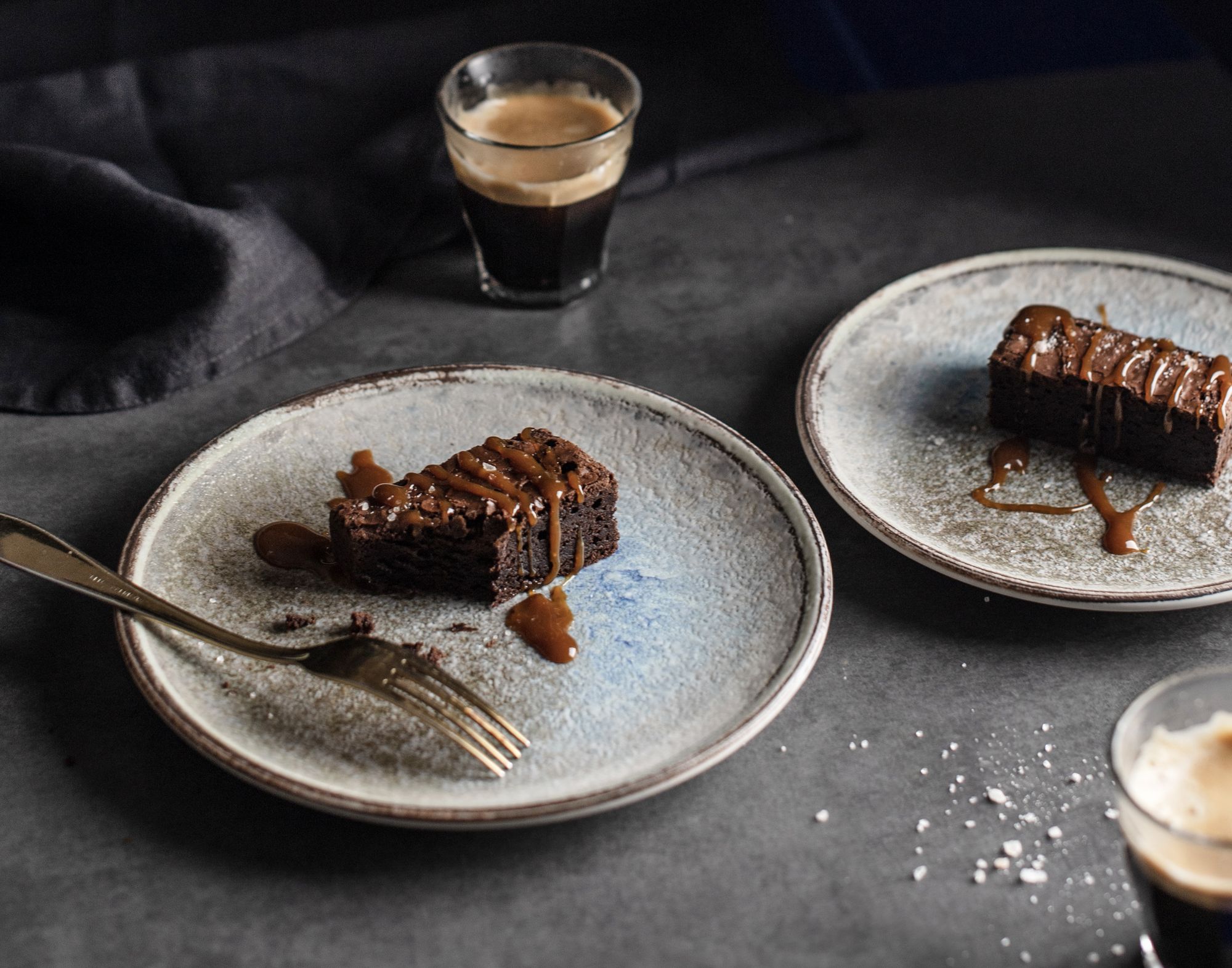
Tableware is one of the last layers specified in a hotel project, yet guests handle it at every meal. A sound specification starts from the concept and the service format, then works through material, collection depth, color and ordering logistics. This guide follows that order.
Start with the concept and the service format
Before opening any catalog, list the outlets the tableware has to serve: all-day dining, a fine dining room, a pool bar, banquets, room service, a breakfast buffet. Each outlet has different needs in piece types, volume and visual tone. Writing this down first keeps the specification from drifting toward pieces that look good in a render but don't suit the service.
Also ask the operator which pieces they will actually use. A kitchen team that plates on large flat surfaces needs a different range from one that serves bowls and shared platters. Early agreement saves revisions later.
Choose the material family
We work with several material families, each suited to a different role:
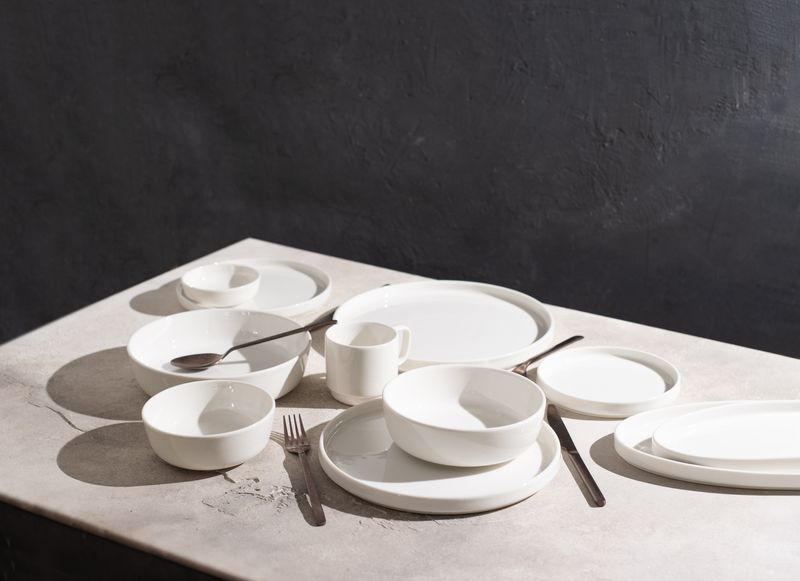
- ID Fine high alumina porcelain is our porcelain line. Collections include Whiteware, Mellow, Reckless, Venecia and the Modest range in several colors.
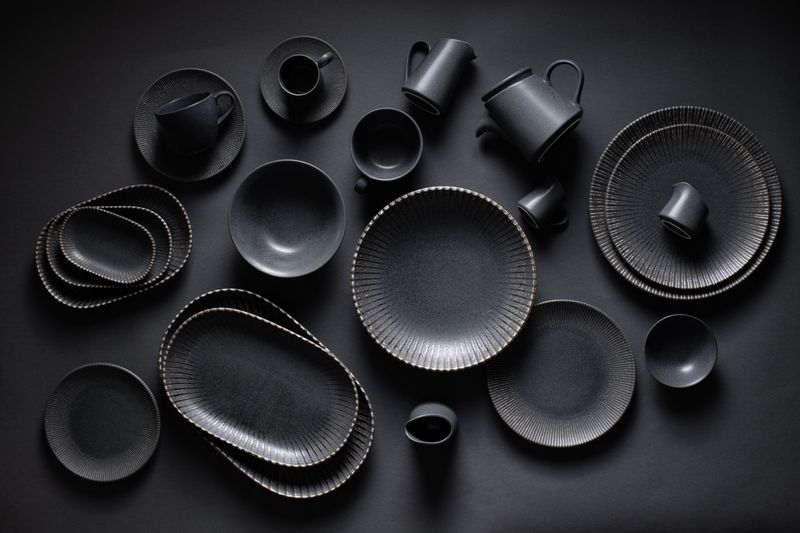
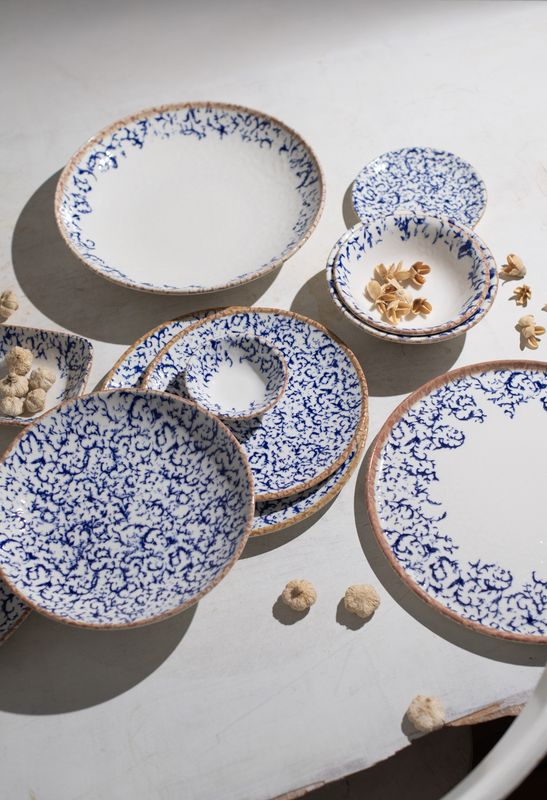
- 1972 vitrified ceramics offers colored and patterned options such as Granada Blue, Seville Navy, Toledo Black and Zen.
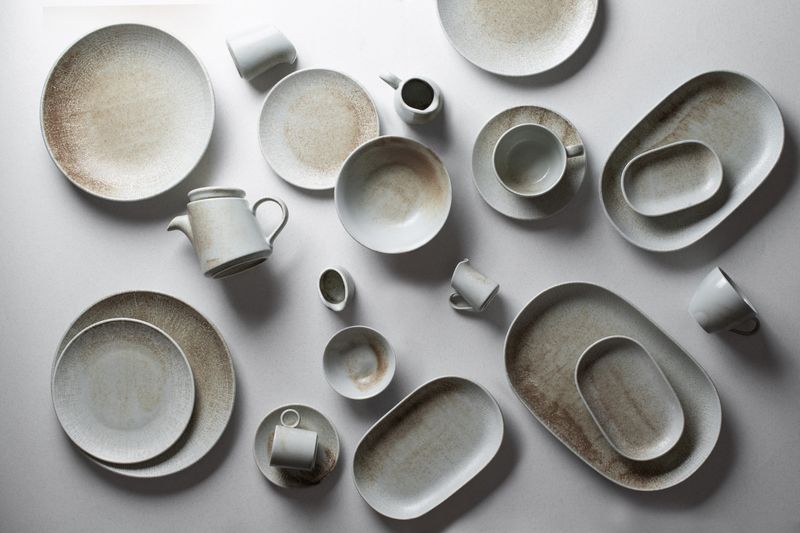
- Roots fine stoneware covers collections such as Cameo, Charma, Coastal and Hazel.
- Tabletop Glassware glass tableware includes Pure, Obsidian, Azure and Tide. These are plates, bowls, platters and trays made of glass. They are tableware, not drinkware.
- Rubikap polycarbonate drinkware is the only drinkware we offer: Premium, Prisma and Service & Events.
A common approach is to anchor the main dining room in one material and bring a second in for specific moments, such as glass platters on a buffet or stoneware for a casual terrace menu.
Check collection depth before you fall in love
A design is only as useful as the range behind it. The number of pieces in a collection tells you how much of the menu it can cover without mixing in unrelated pieces.
- Deep ranges: Whiteware has 43 pieces, Modest Green 38, Reckless 37, and Modest Black, Modest Maroon and Modest Navy 35 each. Mellow has 34.
- Mid-sized ranges: Charma and Coastal have 26 pieces each, Cameo and Hazel 20 each.
- Compact ranges: Cordoba and the Granada collections have 8 pieces each, Maris, Qasbah and Rune have 6.
Compact collections suit concepts with a focused menu or a single outlet. Deeper ranges suit properties that need one visual language across breakfast, lunch, dinner and banquets. Be careful with very small listings: Modest Brown has 2 pieces, Swirl Green has 1 and Marble has 1. They work as accents, not as a full service.
Plan color and coordination
Color is where designers have the most say. A few practical points:
- Decide whether the tableware should recede or become a feature. A white range such as Whiteware lets food and the room take the lead. Colored ranges like Modest Navy, Seville Green or Granada Turquoise add a deliberate palette.
- Several families come in related colorways, such as Granada in Blue, Gray, Sand and Turquoise, or Herba and Silva in Black and Blue. This makes it easier to differentiate outlets within one property while keeping a shared identity.
- Review colors in person, in the actual lighting of the restaurant, rather than from screens alone.
Use glass tableware deliberately
Glass tableware is a strong tool for presentation: platters, trays, plates and bowls that change how a buffet, a dessert station or a shared-plate menu reads in the room. Obsidian has 15 pieces, Pure 18, and Azure and Tide 13 each. Treat these as part of the food-presentation palette alongside porcelain or stoneware, and keep beverage service as a separate decision.
Specify drinkware separately
When the brief calls for drinkware, look to Rubikap polycarbonate. Prisma has 18 pieces, Premium 10 and Service & Events 8. Treat this as its own specification line so it does not get lost between the tableware and the bar program.
Use filters to turn a concept into a schedule
Once you have a shortlist, the shop lets you filter all products by size, capacity and case pack. This is useful when you are building a piece-by-piece schedule for the operator or checking that dimensions fit your table layouts, shelving and service stations. Products ship from our Miami warehouse in full cases, so check case-pack quantities as you plan so that your quantities line up with how the product is packed.
Request samples and project support
Materials, weights, glazes and colors are judged in the hand. Request samples online through the Sample Center and evaluate them with the chef, the F&B team and the owner, in the room where they will be used.
For larger or more complex specifications, send the details through the dealer project support form. If you have questions before that, contact us. Dealers and agents who work on hospitality projects regularly can also look at becoming a distributor.
A short checklist
- Outlets and service formats defined
- Material family chosen for each outlet
- Collection depth checked against the menu
- Color confirmed in real lighting
- Glass tableware and drinkware specified as separate lines
- Sizes, capacities and case packs verified in the shop filters
- Samples reviewed by design, kitchen and ownership
A specification built this way is easier to defend with the client and easier for the operator to live with after opening.