Restaurant Tabletop Audit: A Checklist for Owners and Chefs
A practical audit for owners and chefs: map dishes to vessels, walk the line, split base from accents and test samples before you reorder your tabletop.
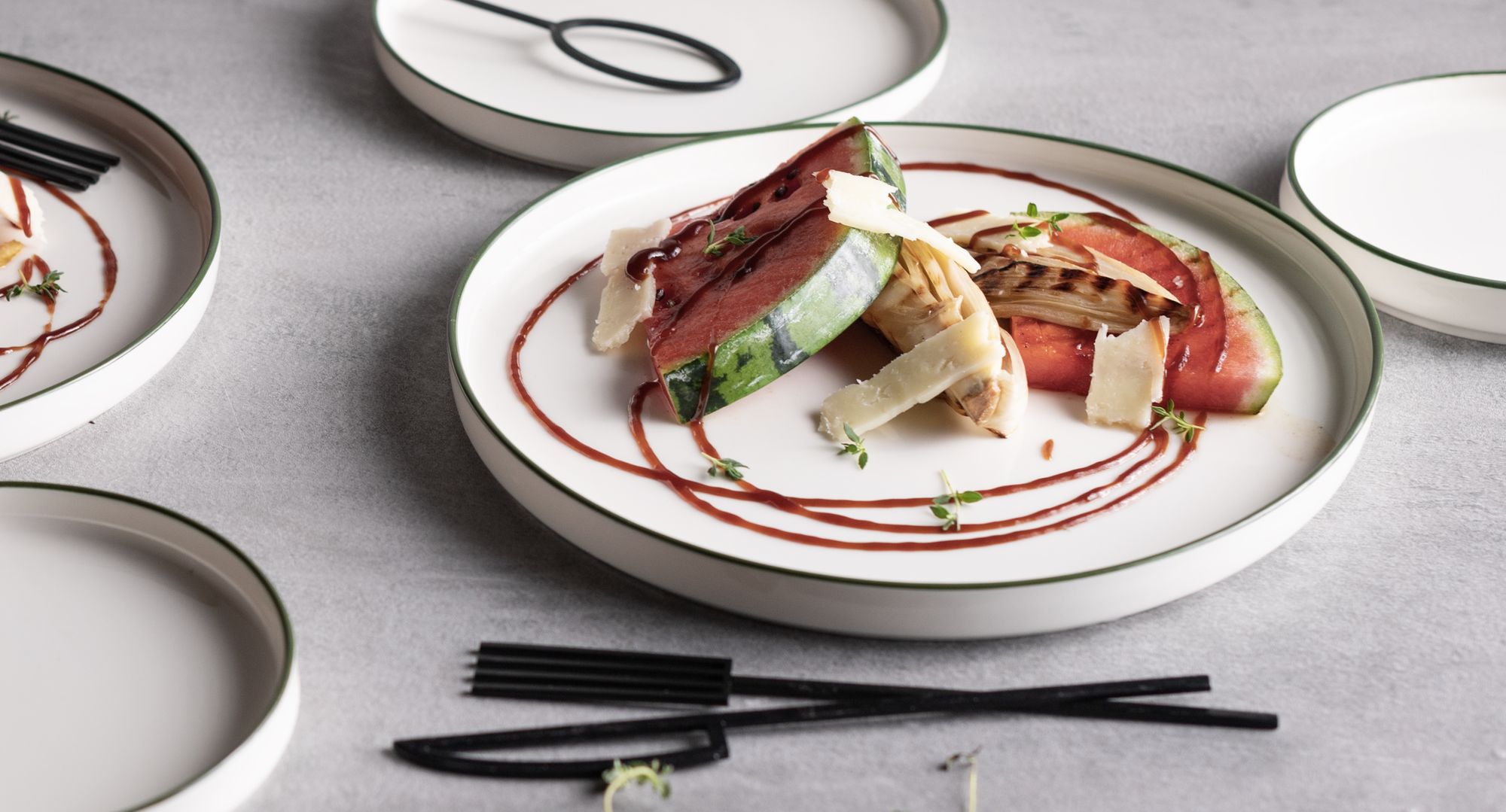
A restaurant tabletop works best when you audit it against your menu, service flow and storage before buying. Map every dish to a vessel, note what chips or crowds the pass, and replace the hardest-working pieces first.
Most owners only look at tableware when something breaks or the concept changes. A short, regular audit gives you a clearer picture and better orders. This guide is built for owners and chefs who want to work through it together. For building a full set from scratch, see our guide to table top planning for restaurants.
Start with the menu, not the catalog
Print your current menu and write the vessel next to every dish: dinner plate, shallow bowl, platter for sharing, small plate for starters, dessert plate. You will usually find two things:
- Dishes that share a plate only because that was what you had, not because it suits the plating.
- Menu sections with too many different vessels, which complicates storage and restocking.
The aim is not to own more shapes. It is to give each menu section a deliberate vessel and cut the ones that do no work.
Walk the line with the chef
The chef sees things an owner will not, so do this step together at a busy service:
- The pass: Does the plate size leave room for sauce and garnish without crowding? Do cooks wipe rims often?
- Heat and cold: Which dishes arrive hot, and which are served chilled or at room temperature? Each may call for a different material or shape.
- The dish pit: Which pieces are awkward to rack, stack or carry? Ask the dishwashing team. They know which pieces get chipped.
- Storage: Is there shelf space for the shapes you use, in the quantities you hold?
Write down the pieces that cause the most friction. Those are your first replacements.
Separate your base from your accents
A dependable tabletop usually has a base and a few accents.
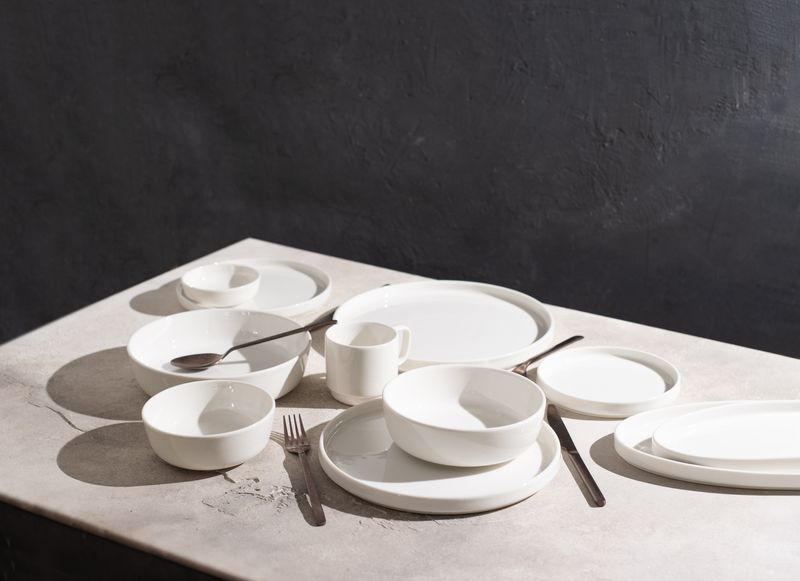
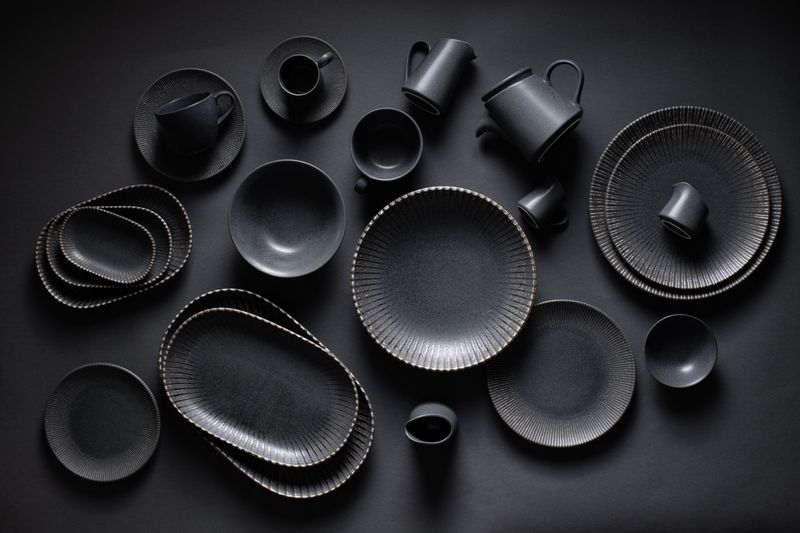
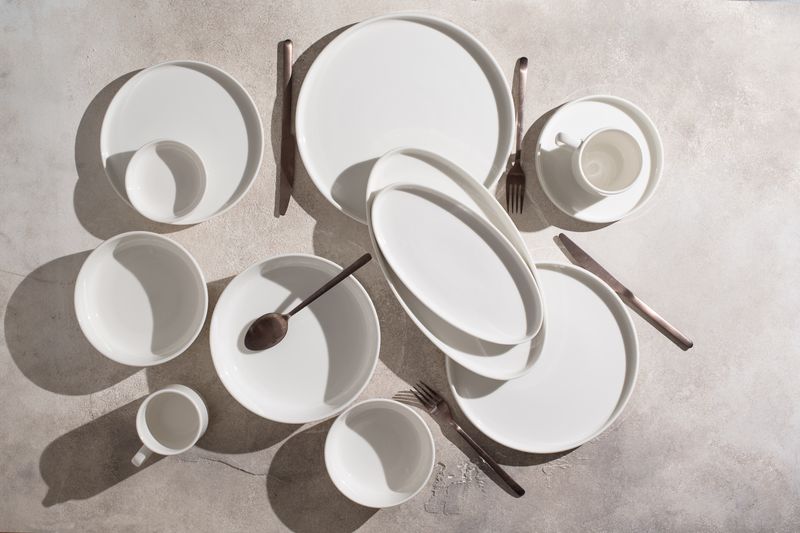
The base is the plain, repeatable pieces that carry most covers. Our ID Fine high alumina porcelain ranges are a natural fit here. Whiteware has 43 pieces, Reckless has 37 and Stolt has 10, so you can choose by how much range your menu needs. If you want color in the base, the Modest family comes in Black, Green, Maroon and Navy, each with 35 to 38 pieces, plus a small Brown line of 2 pieces.
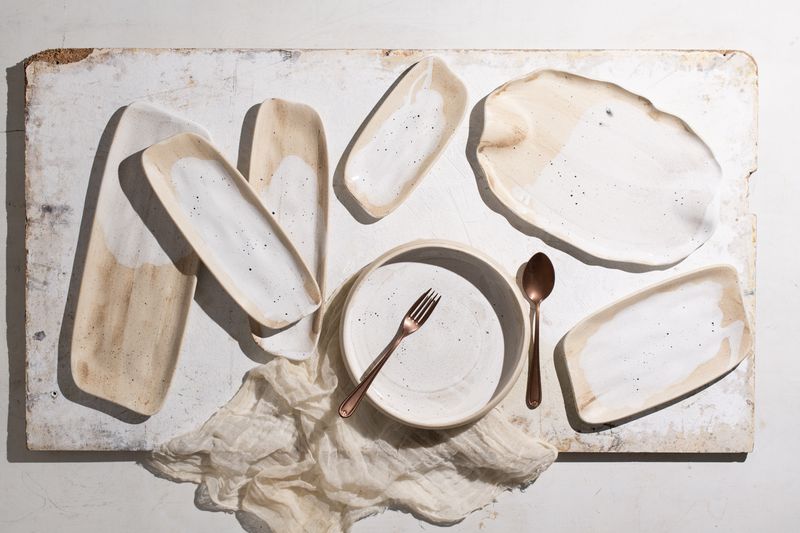
The accents are the pieces that give a dish or a section its personality. Roots fine stoneware, such as Cameo (20 pieces) or Coastal (26 pieces), brings a more handmade look. The 1972 vitrified ceramics, such as Granada Sand (8 pieces), suit a smaller, more focused offer.
Keeping accents to one or two sections of the menu protects your budget for restocking and keeps the table coherent.
Match the material to the job
Choose each material for the role it will play, not only for how it looks.
- ID Fine high alumina porcelain: a clean canvas for plated dishes and a good base for a full service.
- 1972 vitrified ceramics: a wide range of finishes in compact collections, useful when you need a distinct look for a specific concept or room.
- Roots fine stoneware: a tactile, artisanal feel for rustic or ingredient-led menus.
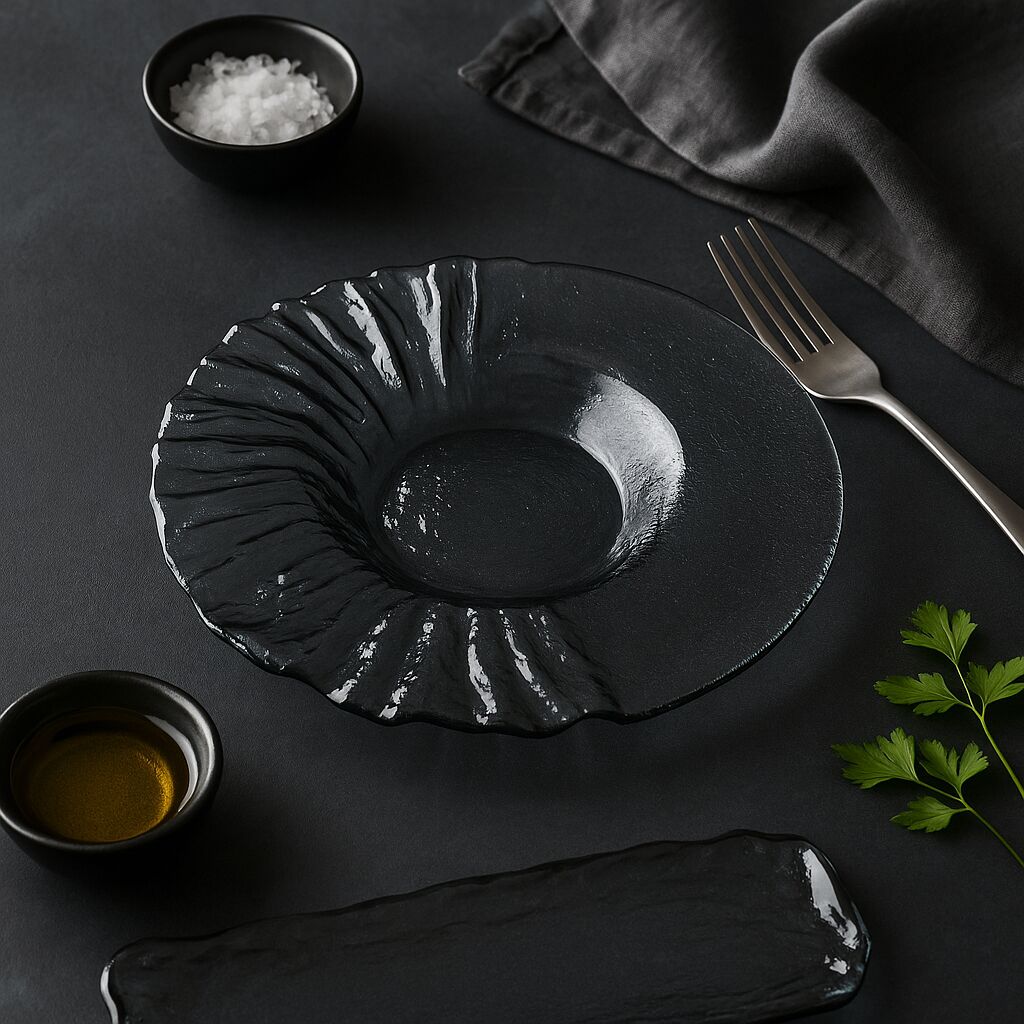
- Tabletop Glassware glass tableware: plates, bowls, platters and trays made of glass. Pure has 18 pieces and Obsidian has 15. They work well for cold starters, desserts and shared presentations.
- Rubikap polycarbonate drinkware: the only drinkware we sell, with tumblers, goblets, pitchers and mugs. Service & Events has 8 pieces and suits high-volume or outdoor service.
If you serve by the pool or the sea, our article on choosing tableware for seaside restaurants covers that setting in more depth.
Check consistency across the whole table
Before you commit, set a full cover on a table: plate, bowl, serving piece and drinkware. Look at it under your actual dining room lighting, not a showroom's. Ask:
- Do the colors and finishes sit well together?
- Does the size of the plate suit the size of the table?
- Does the drinkware match the tone of the service?
If you manage more than one venue, compare the sets side by side. Our piece on venue-specific tableware strategies explains how to keep a shared identity while adapting to each room.
Test with samples, then order in cases
Do not decide from photos alone. Request samples through the Sample Center and put them through a real service: plating, the pass, the dish pit and a full clearing. Let the chef and the floor team each give an opinion, since they judge different things.
Once you have chosen, remember that products ship from our Miami warehouse in full cases. Use the filters on /shop for size, capacity and case-pack so your order matches what you actually need to stock. If you are planning a larger opening or a renovation, the dealer project support form is the way to get help with the scope.
A one-page audit checklist
Print this and fill it in with your chef:
- List every dish and its current vessel.
- Mark the pieces that chip, crowd the pass or are hard to store.
- Split the set into base pieces and accent pieces.
- Choose a material for each role.
- Set a full cover on a table and review it under real lighting.
- Request samples and test them through a full service.
- Order by case-pack, matching your storage space.
Run this audit at least when you update the menu or open a new area. Small, regular adjustments keep your tabletop working for the kitchen and the guest. If you have questions, contact our team.